Some of Italy’s most fascinating wine discoveries are hiding in plain sight
When people talk about Piedmont, they usually mean Barolo and Barbaresco. And, of course, those wines deserve every bit of their reputation. But there’s another Piedmont we love just as much: a patchwork of quiet hills, mountain vineyards, medieval villages and family-run wineries, where local grape varieties have been growing for generations — sometimes just a few valleys away from the famous names, yet almost unknown beyond their home territory.
These are places we’d love to share with travelers who have already seen a little of Italy, or who simply prefer discovering something before everybody else does.
Here are four corners of Piedmont worth keeping on your radar 
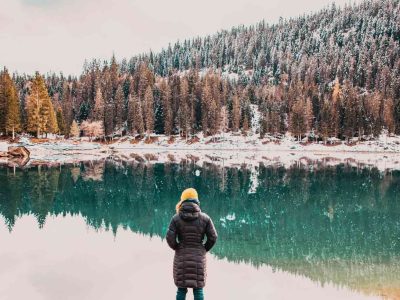
North of Turin, where the Alps begin to frame the horizon, the landscape changes dramatically. The Canavese is shaped by an ancient glacier that left behind rolling morainic hills, scattered lakes and soils rich in glacial stones. It feels greener, cooler and a little wilder than the classic wine hills of southern Piedmont.
Its signature grape is Erbaluce, a native white variety with a wonderfully versatile personality. Depending on how it is made, it can become a fresh, precise still wine, a sparkling wine made using the traditional method, or the remarkable sweet Caluso Passito, made from dried grapes.
And then there is Carema, right by the Valle d’Aosta border. Here, Nebbiolo grows on steep terraces supported by dry-stone walls, with vines clinging to the mountain slopes.
What I love about this part of Piedmont is the contrast: a tasting of mineral, lively Erbaluce one moment; a structured, age-worthy red the next. Add a walk around Lake Candia, a stop in a small village, or a relaxed lunch featuring freshwater fish and local specialties, and you have the ingredients for a day that feels wonderfully unhurried.

Travel north toward the foothills of the Alps and you enter another world of Nebbiolo. In places such as Boca, Gattinara, Ghemme and Bramaterra, vineyards occupy hills shaped by ancient geological forces, with forested slopes and mountain views often never far away.
These wines may share Nebbiolo with Barolo, but they tell a different story. The cooler setting and distinctive soils can give them a more taut, savoury and finely structured character. Depending on the appellation and blend, local grapes such as Vespolina, Croatina and Uva Rara also play an important role.
This is a wonderful region for travelers who enjoy comparing wines and asking questions. Why does the same grape taste different in another landscape? What happens when Nebbiolo meets a little Vespolina? And why do some of these names remain so unfamiliar outside Italy?
Between tastings, there are forest paths, quiet villages and the chance to explore the foothills at a slower pace. It’s easy to imagine a day that starts among the vines and ends with a seasonal lunch in a local trattoria.

East and southeast of Turin, the Monferrato (UNESCO heritage since 2014) unfolds in a succession of rounded hills, vineyards, villages and farmhouses. It is a landscape made for wandering without too much of a plan — and for sitting down at the table when something smells too good to resist.
Here, the wine story goes well beyond Barbera. Take Grignolino, a native red grape associated particularly with the Asti hills and Monferrato Casalese. It can produce pale, lively wines with a firm tannic edge and plenty of character — a useful reminder that a red wine doesn’t need a deep colour to make an impression.
Then there is Ruchè, an aromatic red grape closely associated with the Castagnole Monferrato area, and Freisa, another historic Piedmontese variety found across several parts of the region. Each has its own personality, and both reward curious drinkers who like to move beyond the familiar.
The pleasures here aren’t limited to the glass. Depending on the season, you might combine a tasting with a market visit, a cooking session, a countryside walk or a long lunch built around local produce. For a more restorative stay, the hills also lend themselves to slow mornings, scenic drives and time at a countryside spa or wellness retreat.

In the southeastern corner of Piedmont, close to the Ligurian and Lombard borders, the Colli Tortonesi are a particularly interesting place for wine lovers who enjoy discovering a grape before it becomes a household name.
The variety to know is Timorasso, often sold under the name Derthona. This native white grape has become the calling card of the area, producing wines with structure, concentration and the ability to develop beautifully with bottle age. It is a serious alternative for travelers who think they already know what Piedmontese wine can be.
But Timorasso is not the whole story. The area’s vineyards also produce Barbera, Croatina, Cortese, Dolcetto and other local varieties. That diversity makes a tasting here an opportunity to explore a whole wine landscape rather than focus on one celebrated label.
The countryside is ideal for a slower kind of journey: rolling hills, small villages, vineyard roads and meals that follow the seasons. And because this corner of Piedmont sits at a crossroads between regions, it can also be woven into a longer itinerary connecting wine, food and different Italian landscapes.
The real luxury? Discovering a place that still feels like a secretWhat connects these four areas is not a single grape or a particular style of wine. It’s the pleasure of discovering how much variety can exist within one region — and how closely wine is tied to geology, climate, local traditions and the people who choose to keep them alive.
For some travelers, the highlight might be a rare indigenous grape. For others, it could be a walk through the hills, a quiet lunch, a conversation with a winemaker or an afternoon spent unwinding somewhere surrounded by vineyards.
And that’s exactly why we think these places deserve a place in a tailor-made Italian itinerary.
Not as a substitute for Piedmont’s famous wine destinations, but as a different way to experience the region: more personal, more unexpected, and full of discoveries that are all the more rewarding because you didn’t know to look for them.